
 EN
EN
 ar
ar bg
bg hr
hr cs
cs da
da nl
nl fi
fi fr
fr de
de el
el hi
hi it
it ko
ko no
no pl
pl pt
pt ro
ro ru
ru es
es sv
sv tl
tl iw
iw id
id lv
lv lt
lt sr
sr sk
sk sl
sl uk
uk vi
vi et
et hu
hu th
th tr
tr fa
fa ms
ms hy
hy ka
ka ur
ur bn
bn mn
mn ta
ta kk
kk uz
uz ku
ku
NB-IoT DTU
The NB-IoT DTU lists Changsha, China, as the place of origin, Kingmach as the brand, GB50982-2014 as the certification, and a minimum order quantity of one piece. Pricing is negotiable, payment terms are T/T in advance, and delivery time is listed as instant. These business details are useful when the platform is purchased together with sensors, data loggers, acquisition modules, communication devices, or a wider monitoring package. They also show that the software is treated as a formal product category within the Kingmach monitoring range.
Application of NB-IoT DTU
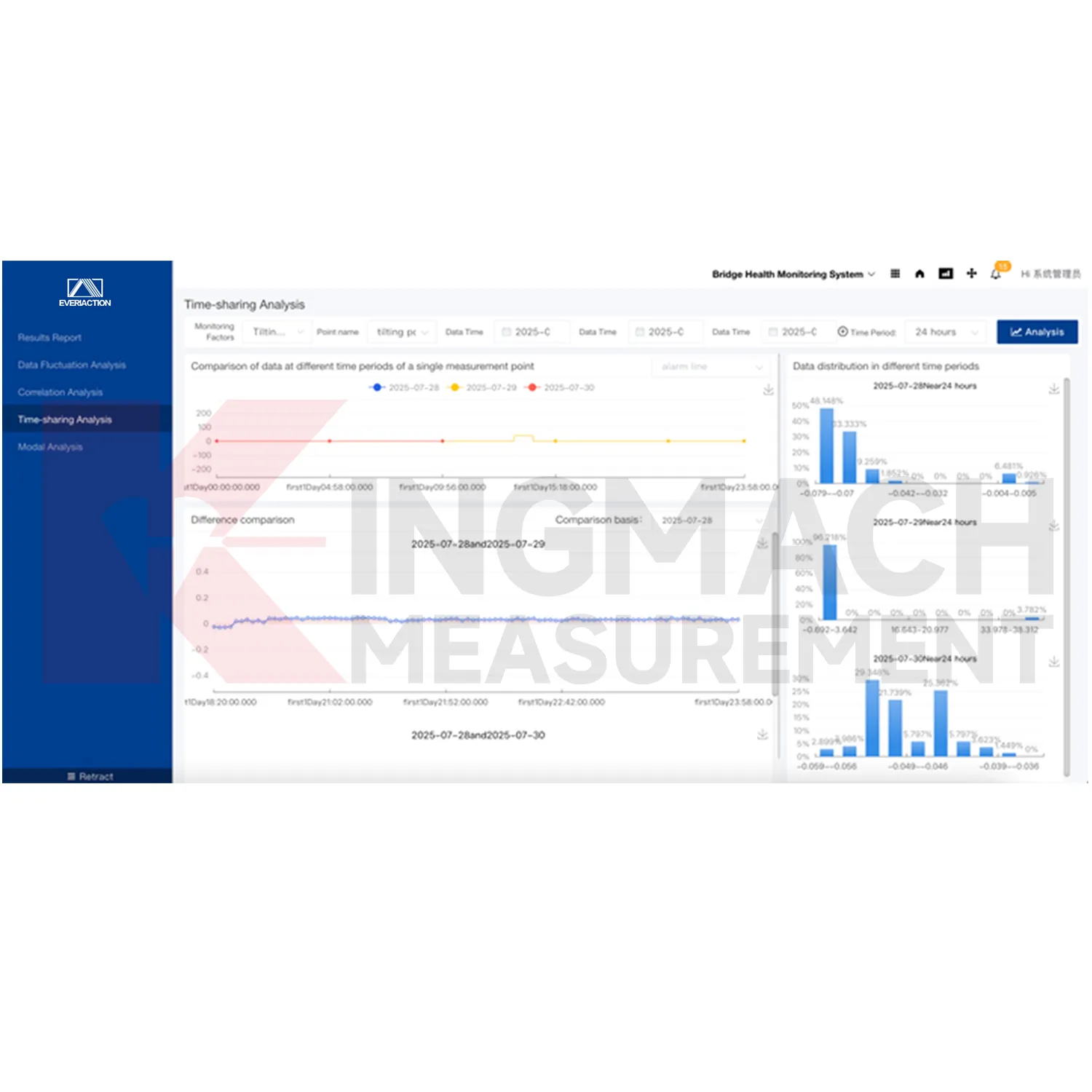
Railway and subway projects use Kingmach NB-IoT DTU to manage distributed sensors along stations, subgrades, tunnels, bridges, slopes, and nearby buildings. Access windows can be limited, so remote data review and alarm records are important. Wired or wireless transmission lets devices send data to the Cloud Platform for storage and visualization. When an alarm appears, related channels and project records help the team decide whether the issue is tied to traffic, construction, water, settlement, or a device condition.
The future of NB-IoT DTU
Big data workflows will shape the future of Kingmach NB-IoT DTU. Long-term structural monitoring creates large volumes of readings, alarms, inspection notes, and project documents. Raw storage alone is not enough; the platform must help filter, analyze, compare, visualize, and report those records. Over time, historical baselines will become more useful for judging whether a new event is ordinary, seasonal, construction-related, or abnormal. This makes data history an active part of engineering management.
Care & Maintenance of NB-IoT DTU
Before deploying Kingmach NB-IoT DTU, define the project structure, asset names, monitoring points, device types, channel names, alarm levels, user roles, and report needs. A platform is easier to use when the data model matches the actual project. If point names, units, locations, and device IDs are unclear at the start, later trend review and alarm handling become harder. Good setup work creates a stable base for real-time storage, visualization, and long-term project management.
Kingmach NB-IoT DTU
Alarm management is one of the practical strengths of Kingmach NB-IoT DTU. The platform supports flexible alarm rule configuration and can provide detailed fault information in real time when a structure fails or a monitoring value crosses the configured logic. A useful alarm is not just a red mark on a screen; it needs point identity, time, severity, related data, and maintenance reference. By combining alarm rules with project records and monitoring channels, the platform helps teams respond to abnormal behavior with more discipline and less guesswork.
FAQ
Q: Who should receive accounts?
A: Give access only to the owner, operator, engineer, inspector, or reviewer roles that need the platform.
Q: What does an operator need?
A: An operator needs status, active alarms, communication condition, and recent abnormal records.
Q: What does an engineer need?
A: An engineer needs trend comparison, related channels, event notes, and inspection records.
Q: What supports later expansion?
A: Stable project names, point names, device IDs, and channel maps make new device access easier.
Q: What belongs in handover?
A: Provide accounts, permissions, device list, channel map, alarm rules, report setup, backup method, and recent data notes.
Reviews
Michael Anderson
The strain gauges and load cells are extremely accurate and stable. They performed very well in our bridge monitoring project. Highly recommended!
Andrew Lee
The visualization software is intuitive and powerful. It helps us analyze monitoring data efficiently.
Latest Inquiries
To protect the privacy of our buyers, only public service email domains like Gmail, Yahoo, and MSN will be displayed. Additionally, only a limited portion of the inquiry content will be shown.
Evelyn***@gmail.comSouth Africa
Hi, we are a contractor working on tunnel construction and need settlement sensors and displacement ...
Sophia***@gmail.comUnited Kingdom
Good day, we need environmental monitoring sensors including temperature, humidity, and wind sensors...