
 EN
EN
 ar
ar bg
bg hr
hr cs
cs da
da nl
nl fi
fi fr
fr de
de el
el hi
hi it
it ko
ko no
no pl
pl pt
pt ro
ro ru
ru es
es sv
sv tl
tl iw
iw id
id lv
lv lt
lt sr
sr sk
sk sl
sl uk
uk vi
vi et
et hu
hu th
th tr
tr fa
fa ms
ms hy
hy ka
ka ur
ur bn
bn mn
mn ta
ta kk
kk uz
uz ku
ku
weir flow meter
The automatic data path for Kingmach weir flow meter should be planned before the site is closed or flooded. Flow records need clear time stamps, stable communication, correct units, and a point name that matches the physical channel. If a project has more than one weir point, the names should identify the structure, flow direction, and purpose. The data platform should allow operators to see normal patterns, storm response, maintenance effects, and abnormal events without guessing which point they are reviewing. A clean data path also helps when flow is compared with rainfall, water level, seepage, or gate operation. Good acquisition planning makes the measurement easier to trust and easier to use in daily operation. The strongest flow reports are written around decisions. They show whether to keep observing, clean the channel, inspect upstream conditions, check downstream backwater, or compare the point with another water-level or rainfall record. A weir point also needs safe routine access. If staff cannot reach the crest, enclosure, or sensing area during wet weather, the project may collect data but struggle to maintain confidence in it when the record is most important. Designers, operators, maintenance staff, and owners may read the same curve, so the record needs clear site conditions, inspection notes, and action history in plain engineering language.
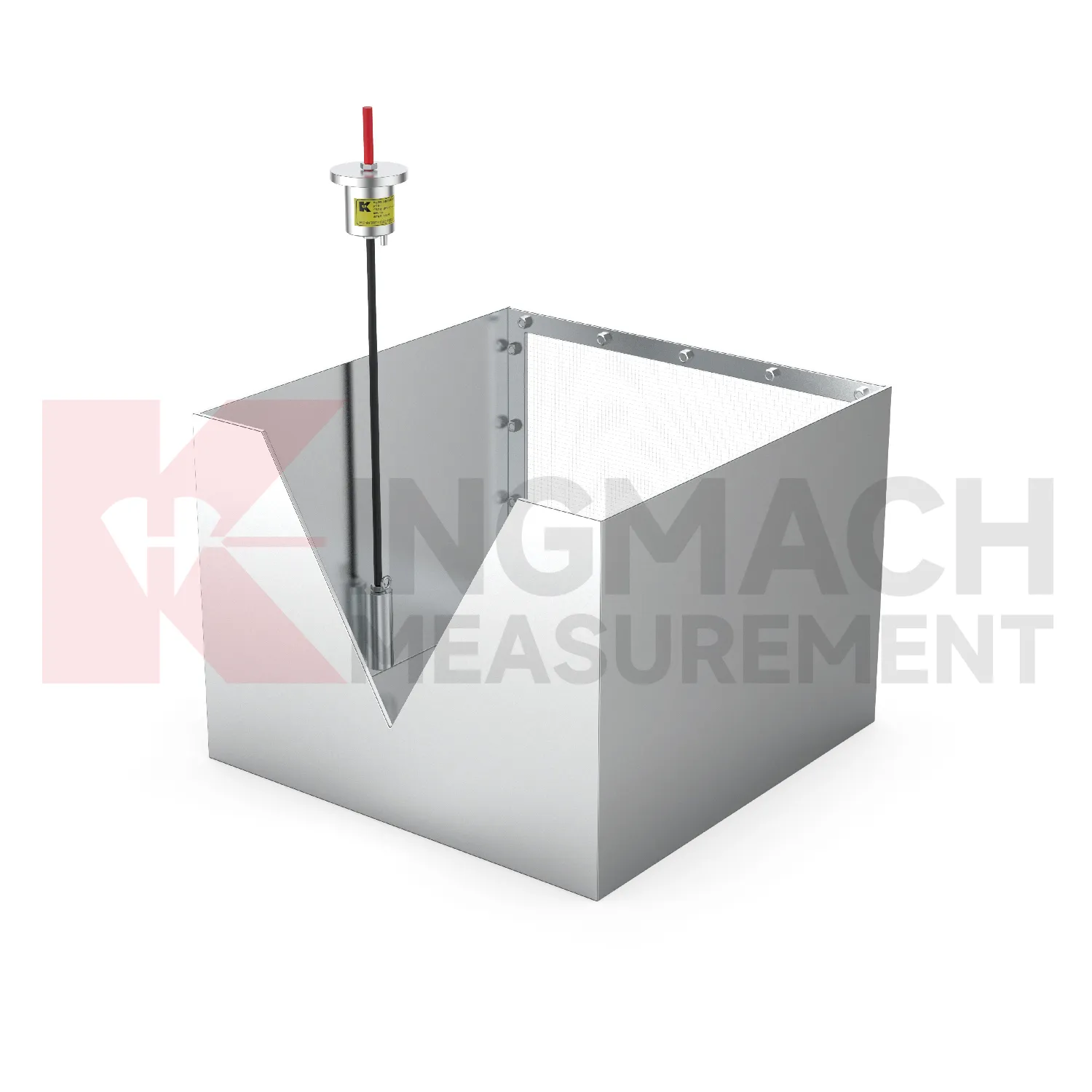
Application of weir flow meter
Construction sites use Kingmach weir flow meter to document temporary drainage, dewatering discharge, runoff control, or water diversion during staged work. Temporary systems can change quickly as excavation, rainfall, pumping, and channel layout change. A weir point gives the project team a dated flow record that can be compared with weather, pumping logs, inspection notes, and site activities. The installation should be protected from equipment traffic, sediment, concrete washout, and debris. Because temporary drainage often becomes a source of disagreement, a consistent flow record helps contractors, owners, and supervisors discuss the same facts. The record should show not only the flow trend, but also when channels were cleaned, pumps were adjusted, or site conditions changed. On active sites, the measuring location should be easy to identify and hard to disturb. Simple barriers, labels, access notes, and photo records can reduce confusion when crews rotate or work shifts change. The data is most useful when it is tied to daily events such as rain, excavation depth, pump relocation, discharge permit checks, and planned channel cleaning. That connection turns temporary drainage monitoring into a practical record for project control. It also gives managers a clearer basis for scheduling cleaning and documenting discharge changes during busy work periods.
The future of weir flow meter
Remote monitoring will become more important for Kingmach weir flow meter because many flow points are placed in channels, tunnels, drainage outlets, rural irrigation areas, or hydraulic structures that are not checked every day. A remote record can show night flow, storm peaks, delayed discharge, and gradual blockage patterns. Future systems should also show station health, last maintenance, data gaps, and whether the point needs field cleaning. This helps teams know when the record is trustworthy and when the site requires a visit. Remote flow monitoring works best when it reports both water behavior and the condition of the measuring point. Future platforms should make field visits more focused. Instead of sending staff only because a curve looks unusual, the system can show whether the change follows rain, a planned pump event, or a known cleaning activity. That context helps teams decide whether to inspect immediately, wait for confirmation, or review a nearby station first. Remote monitoring becomes more practical when it reduces uncertainty, not when it simply produces more alarms.
Care & Maintenance of weir flow meter
Enclosure and cable care helps Kingmach weir flow meter remain reliable in wet sites. Flow monitoring points may be exposed to splashing, flooding, insects, mud, temperature change, and accidental impact during cleaning or construction. Inspect cable glands, junction boxes, conduit, mounting hardware, grounding, labels, and cabinet seals. A water-related fault can create missing data or unstable readings during storms, flooding, or other high-demand periods. After storms or maintenance work, check the enclosure before trusting unusual data. Field protection should allow safe access for cleaning without putting cables or boxes in the path of tools and debris. Maintenance notes should record whether a cabinet was opened, whether seals were wet, whether cable routes were disturbed, and whether power or communication recovered after inspection. These details are practical because electrical problems often appear at the same time as hydraulic stress. A short note can prevent repeated diagnosis when a later reviewer sees a gap or spike during bad weather.
Kingmach weir flow meter
Kingmach weir flow meter is relevant wherever flow regulation and water resource management depend on reliable open-channel measurement. A weir installation can support irrigation allocation, drainage review, water treatment inflow, reservoir auxiliary discharge, tunnel seepage observation, or small hydraulic structures. The measurement should be treated as part of an operating system. Channel approach, crest condition, water head reading, data collection, and routine cleaning all affect the final flow record. When these parts are documented, the owner can compare current flow with past behavior and decide whether action is needed. The value comes from repeatable measurement, not from isolated readings. A weir point also needs safe routine access. If staff cannot reach the crest, enclosure, or sensing area during wet weather, the project may collect data but struggle to maintain confidence in it when the record is most important. Designers, operators, maintenance staff, and owners may read the same curve, so the record needs clear site conditions, inspection notes, and action history in plain engineering language.
FAQ
Q: How does Kingmach weir flow meter help drainage projects?
A: It shows how discharge changes during routine operation, storms, dewatering, blockage, cleaning, or downstream backwater.
Q: How does it help irrigation projects?
A: It helps compare delivery timing, flow distribution, channel condition, rainfall effect, and water-use management across operating periods.
Q: How does it help tunnels?
A: It can track drainage or seepage-related flow and compare changes with rainfall, groundwater, maintenance cleaning, or underground construction activity.
Q: How does it help dam or slope drainage?
A: It provides a flow record that can be reviewed with seepage, rainfall, pore pressure, settlement, displacement, and inspection notes.
Q: How does it fit into a platform?
A: It works as the flow layer beside rainfall, water level, seepage, environmental, and structural monitoring records. A weir point also needs safe routine access. If staff cannot reach the crest, enclosure, or sensing area during wet weather, the project may collect data but struggle to maintain confidence in it when the record is most important.
Reviews
Christopher Martinez
Very satisfied with the readouts & data loggers. User-friendly interface and supports multiple sensor inputs.
James Thompson
The tiltmeters and accelerometers are very sensitive and provide precise data. Perfect for our structural health monitoring system.
Latest Inquiries
To protect the privacy of our buyers, only public service email domains like Gmail, Yahoo, and MSN will be displayed. Additionally, only a limited portion of the inquiry content will be shown.
Ava***@gmail.comAustralia
Hi, I am looking for reliable tiltmeters and accelerometers for structural health monitoring. Please...
Charlotte***@gmail.comUnited Arab Emirates
Hi, we require instrumentation cables suitable for harsh environments. Could you advise on specifica...
Related product categories
- Intelligent Weir Flow Meter
- Smart Weir Flow Meter
- weir flow meter
- weir type flow meter
- weir flow meter Price
- weir flow meter Manufacturer
- weir flow meter Supplier
- weir flow meter Solution
- weir flow meter System Integration
- weir flow meter Localization
- weir flow meter Domestic Manufacturing
- weir flow meter China