
 EN
EN
 ar
ar bg
bg hr
hr cs
cs da
da nl
nl fi
fi fr
fr de
de el
el hi
hi it
it ko
ko no
no pl
pl pt
pt ro
ro ru
ru es
es sv
sv tl
tl iw
iw id
id lv
lv lt
lt sr
sr sk
sk sl
sl uk
uk vi
vi et
et hu
hu th
th tr
tr fa
fa ms
ms hy
hy ka
ka ur
ur bn
bn mn
mn ta
ta kk
kk uz
uz ku
ku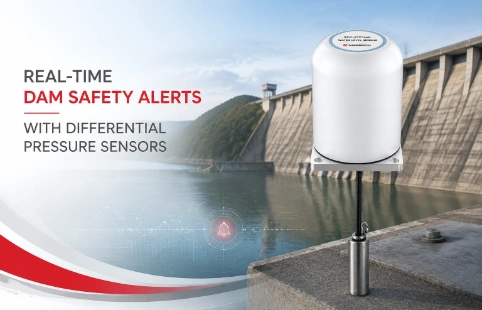
Real-Time Dam Safety Alerts with Differential Pressure Water Level Sensors
Key Takeaways An alert chain needs more than a sensor: define field in...

Resistive Temperature Sensors for Demanding Geotechnical Projects
A temperature shift in a concrete dam might go unnoticed for years — until a crack appears. That’s where resistive temperature sensors come in. At Kingmach, we build sensors that don’t just take readings but keep working year after year in wet, pressurized, or chemically aggressive ground conditions. Our resistive temperature sensors, often based on platinum RTDs or thermistors, are used for tracking thermal gradients, curing heat, and seasonal fluctuations in structures like pile foundations, tunnels, and retaining walls. Since we manufacture in-house and support customization, you can get sensor cables, sheath materials, and output wiring suited to your specific data logger and installation method. Whether you need a single-point measurement or a distributed string, we deliver sensors pre-calibrated and ready to embed. And with our global distribution network, delivery and local support are typically straightforward.
Technical Detail
A resistive temperature sensor converts thermal changes into a measurable resistance variation, and in geotechnical work, that’s usually done with a Pt100 platinum RTD or a negative temperature coefficient thermistor. These elements are embedded in robust metal housings and connected to data loggers through armored cables. Kingmach offers both single-point sensors and multi-level strings, letting you monitor thermal profiles in boreholes, concrete pours, and earthfill dams. We pay attention to how the sensor is actually installed: cable lengths and sheath materials are selected based on the expected pressure, water ingress, and chemical exposure. Output wiring can be 2-, 3-, or 4-wire to match your readout unit, and connector types are chosen for field conditions. Because we manufacture in-house, we can adjust lead times and customize even moderate quantities without the markups typical of third-party sourcing. Common configurations meet IEC 60751 class A or B tolerance, but we can match tighter requirements if needed. Applications include mass concrete temperature monitoring, permafrost ground temperature tracking, and seepage zone detection where temperature anomalies indicate flow paths. For distributed monitoring, sensor strings can combine temperature probes with other instruments like strain gauges or pressure transducers, reducing installation complexity. Technical support covers everything from proper grouting techniques to wiring diagrams, and our logistics network can deliver to project sites in Asia, Europe, and the Americas. When you inherit a site full of irregular boreholes or a tight schedule, having a supplier who builds sensors around your constraints rather than the other way around makes a noticeable difference.
News
Key Takeaways An alert chain needs more than a sensor: define field in...
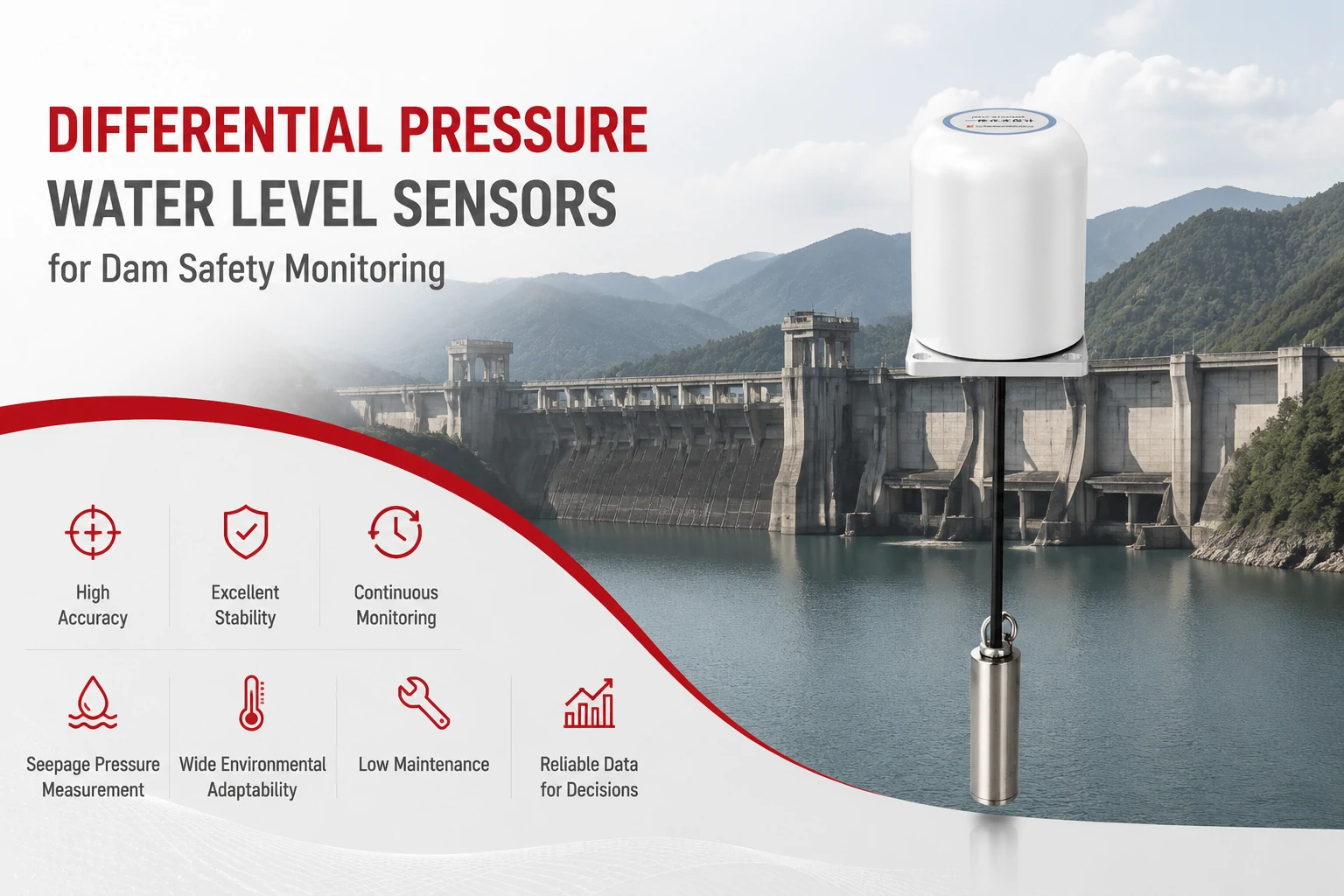
Key Takeaways The strongest fit is usually a confined, submerged, or s...
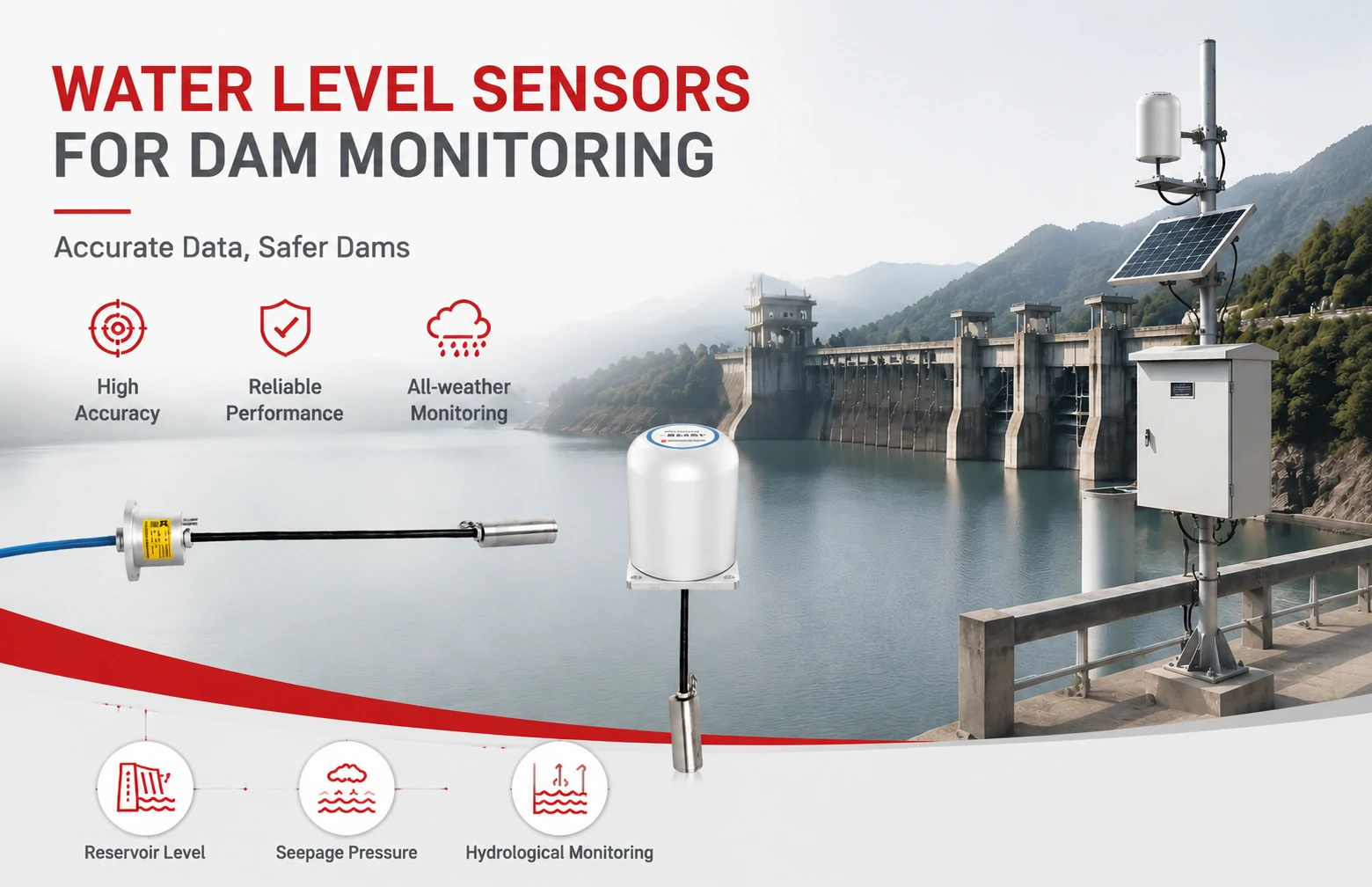
Kingmach Water Level Sensors for Dam Monitoring: A Buyer's Guide to Differential Pre...
Products
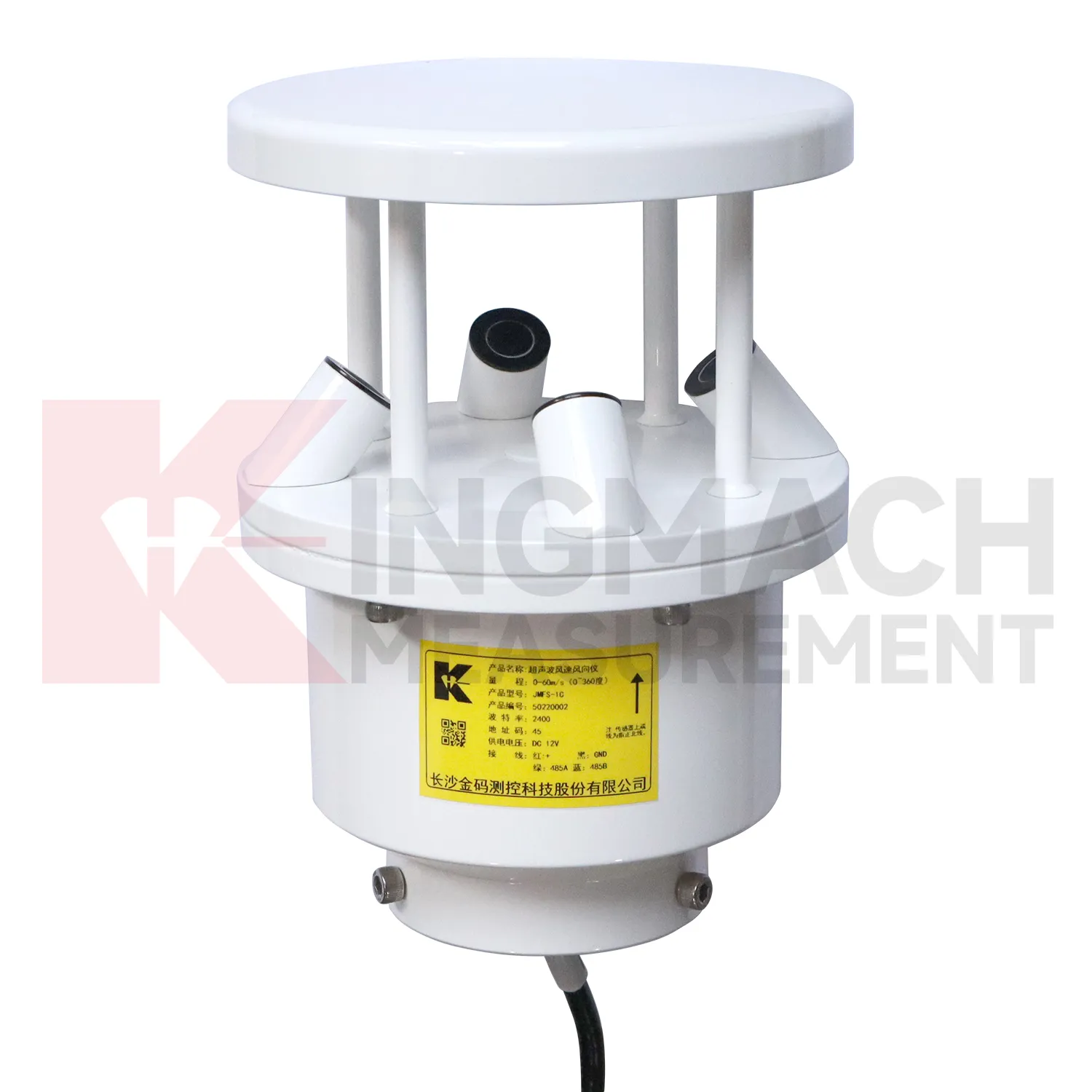
Ultrasonic Wind Speed and Direction Sensor JMFS-1C
View Details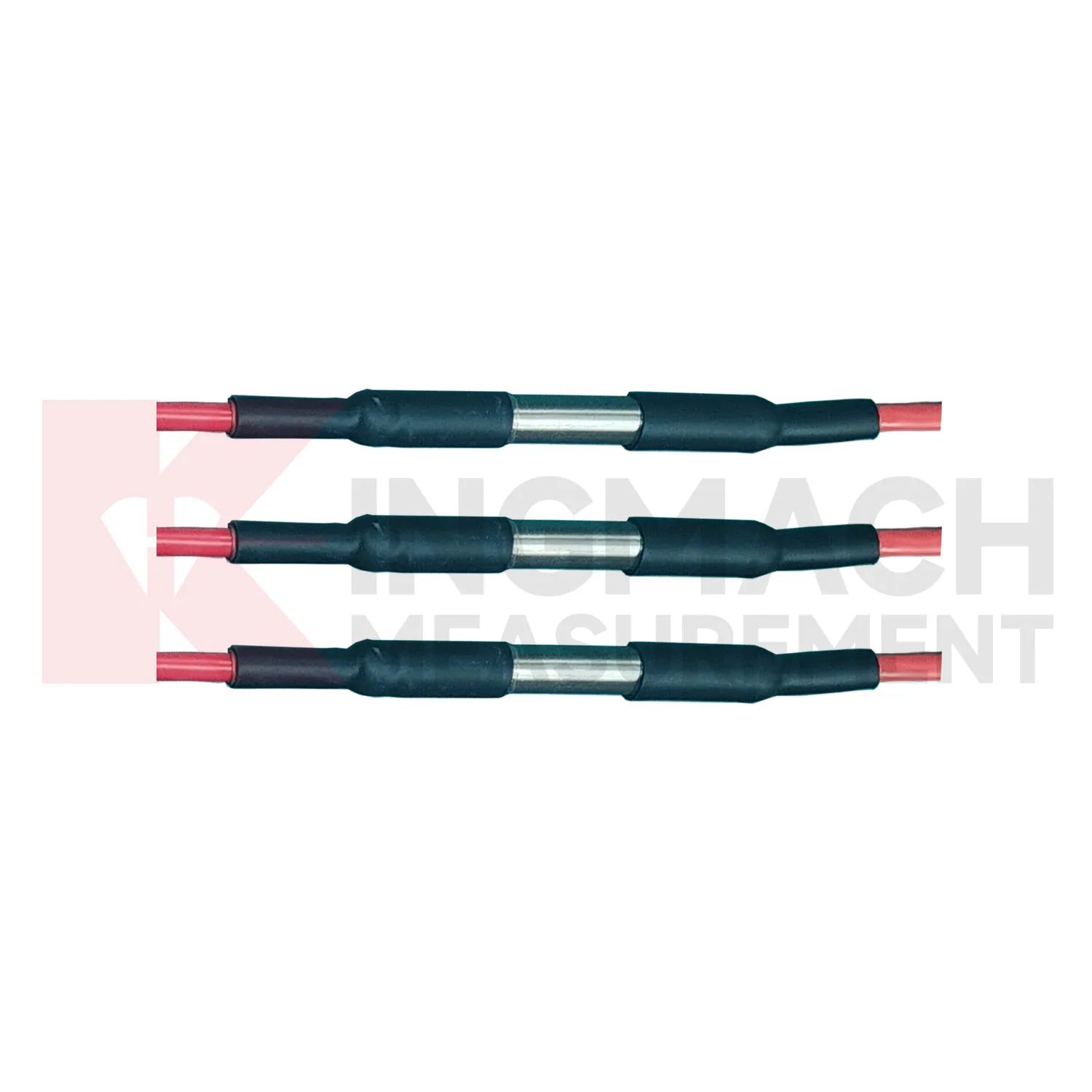
FAQ
Yes, we typically use stainless steel housings and fully sealed cable transitions that hold up under high water pressure. Cable jacketing materials like polyurethane or FEP are chosen based on the chemical environment and expected service life, often 10 years or more if properly installed.
The two most common are Pt100 platinum RTDs and NTC thermistors. Pt100 gives linear output and is easier to run over long cable distances, while thermistors offer higher sensitivity over a narrower range. We can discuss which suits your measurement range and logger input.
We provide wiring options: 2-wire for short runs where lead resistance is small, 3-wire to compensate for cable resistance, or 4-wire for highest accuracy. You can specify the cable length, termination (stripped wires, connectors, terminal box), and whether you need a loop-powered transmitter if your logger only accepts 4–20 mA.
Absolutely. We build strings with multiple resistive sensors spaced at your specified intervals, sometimes combined with other transducer types like vibrating wire piezometers. The cable assembly is fully molded and tested before shipment to ensure each sensor reads correctly along the string.
That depends on the complexity, but for a standard Pt100 sensor with custom cable length, we often ship within 2–3 weeks. Specialized housing materials or combined sensor strings may take longer. We’re transparent about timelines during the quoting process, and we keep buffer stock of common sensing elements to avoid delays.
Share your product type, target capacity, and application requirements. Our team can review the details and recommend a practical next step.
If you are interested in our products or want to become our partner.
Please leave your contact information, our team will contact you as soon as possible.
Mail: [email protected]
Contact Us: +8613808434127
Address: No. 188 Tongzipo West Rd, Changsha, Hunan, China