
 EN
EN
 ar
ar bg
bg hr
hr cs
cs da
da nl
nl fi
fi fr
fr de
de el
el hi
hi it
it ko
ko no
no pl
pl pt
pt ro
ro ru
ru es
es sv
sv tl
tl iw
iw id
id lv
lv lt
lt sr
sr sk
sk sl
sl uk
uk vi
vi et
et hu
hu th
th tr
tr fa
fa ms
ms hy
hy ka
ka ur
ur bn
bn mn
mn ta
ta kk
kk uz
uz ku
ku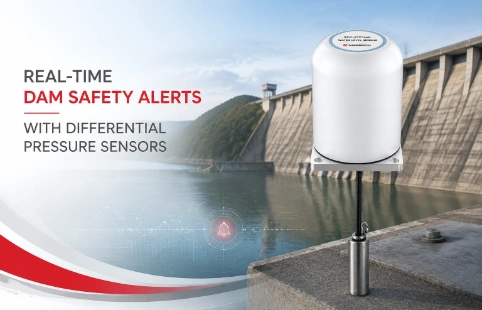
Real-Time Dam Safety Alerts with Differential Pressure Water Level Sensors
Key Takeaways An alert chain needs more than a sensor: define field in...

Kingmach Wireless Temperature Data Logger: Technical Overview
Most wireless temperature loggers look similar on a spec sheet. The difference shows up when you need to pull data from a borehole 50 meters down, or integrate readings into an existing SCADA system that wasn't built yesterday. Kingmach builds these loggers for monitoring engineers who deal with real field constraints—variable sensor wiring, mixed communication protocols, and data formats that have to talk to third-party software without a middleware headache. We'll walk through the technical underpinnings that matter for procurement and site deployment, not just the glossy feature list.
Technical Detail
The Kingmach wireless temperature data logger is built around a modular sensor input architecture. Instead of locking you into a single probe type, it accepts PT100, PT1000, thermocouple, and digital sensors across several channel configurations. That flexibility cuts down on the number of logger variants you need to stock for mixed monitoring arrays. On the wireless side, it supports LoRaWAN, NB-IoT, and Cat-M1—three protocols that cover most field scenarios, from remote geotechnical stations with no mains power to urban construction sites with cellular coverage. The radio module is field-swappable, so you can change communication methods later without replacing the entire logger. Transmission intervals and alarm thresholds are configurable over-the-air; you're not stuck with fixed reporting schedules. Data handling is designed for compatibility with common monitoring platforms. The logger outputs CSV and Modbus TCP/IP, and we provide an MQTT bridge for cloud ingestion. That means it can feed directly into tools like Geoscope, InfluxDB, or generic SCADA systems without a proprietary gateway. Onboard storage holds 128,000 readings per channel, and a circular buffer ensures you never lose the latest data even if transmission is interrupted for days. Power management was a key design priority. The logger runs on a single D-cell lithium battery, typically lasting 2–3 years with hourly transmissions, depending on ambient temperature. An optional external solar panel and rechargeable pack extend that indefinitely for permanent installations. The IP67 housing with a vented Gore-Tex membrane prevents internal condensation—a common failure point in buried or submerged applications. Calibration is traceable to ISO 17025 standards, and each logger ships with a four-point calibration certificate. Measurement accuracy is ±0.2°C across the -40°C to +85°C range, with a resolution of 0.01°C. For projects that demand tighter tolerances, we offer a custom calibration service within a reduced temperature window.
News
Key Takeaways An alert chain needs more than a sensor: define field in...
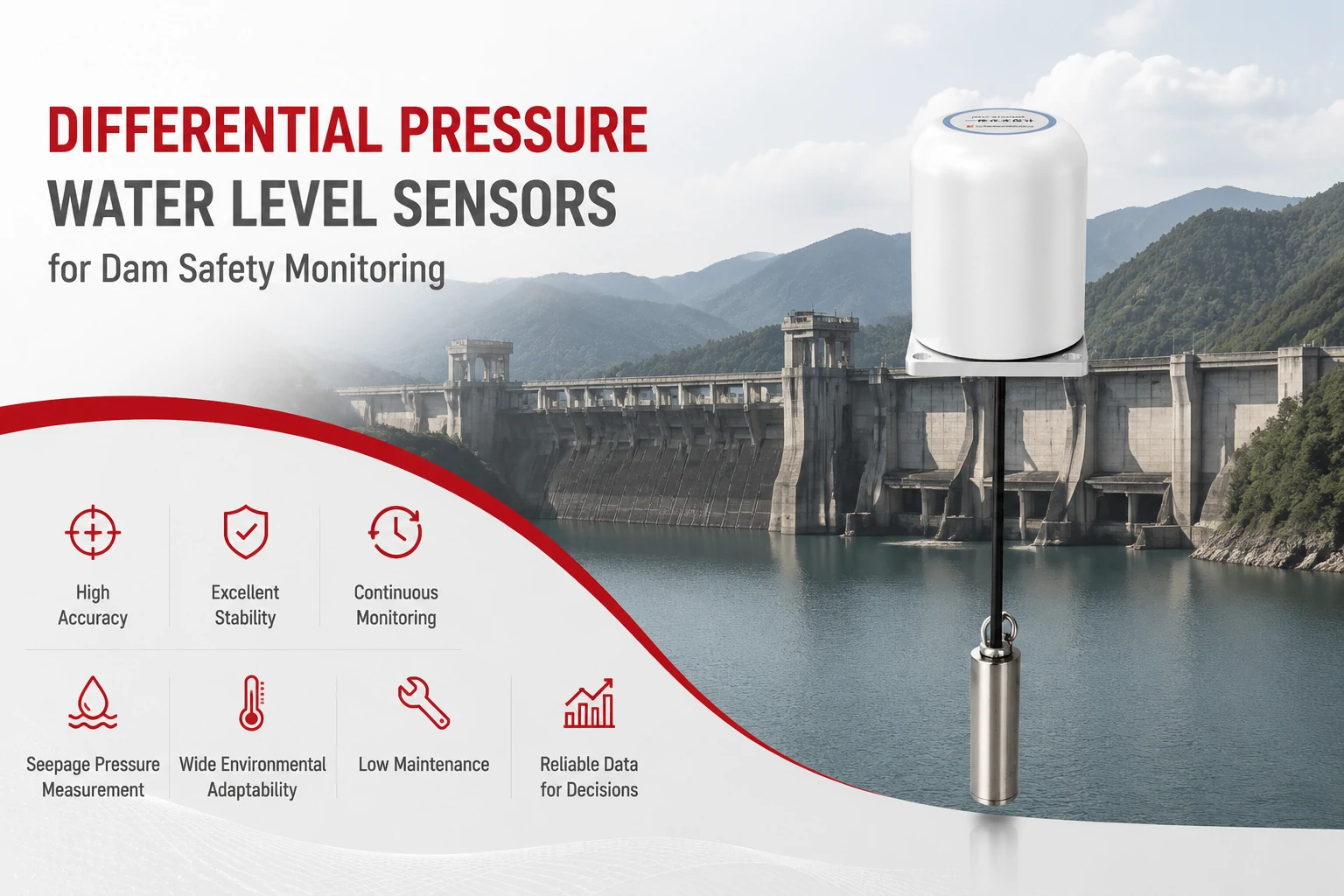
Key Takeaways The strongest fit is usually a confined, submerged, or s...
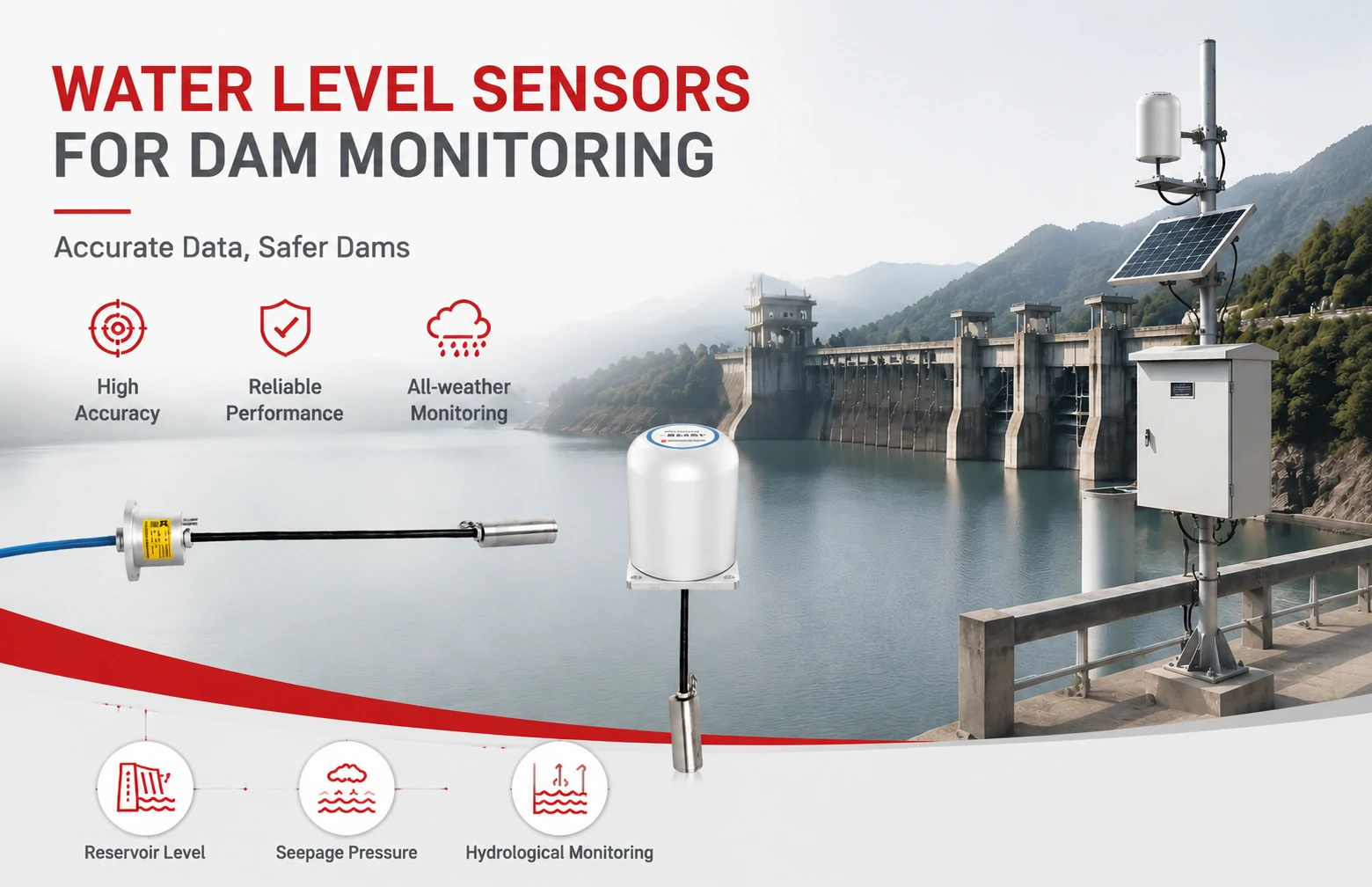
Kingmach Water Level Sensors for Dam Monitoring: A Buyer's Guide to Differential Pre...
Products
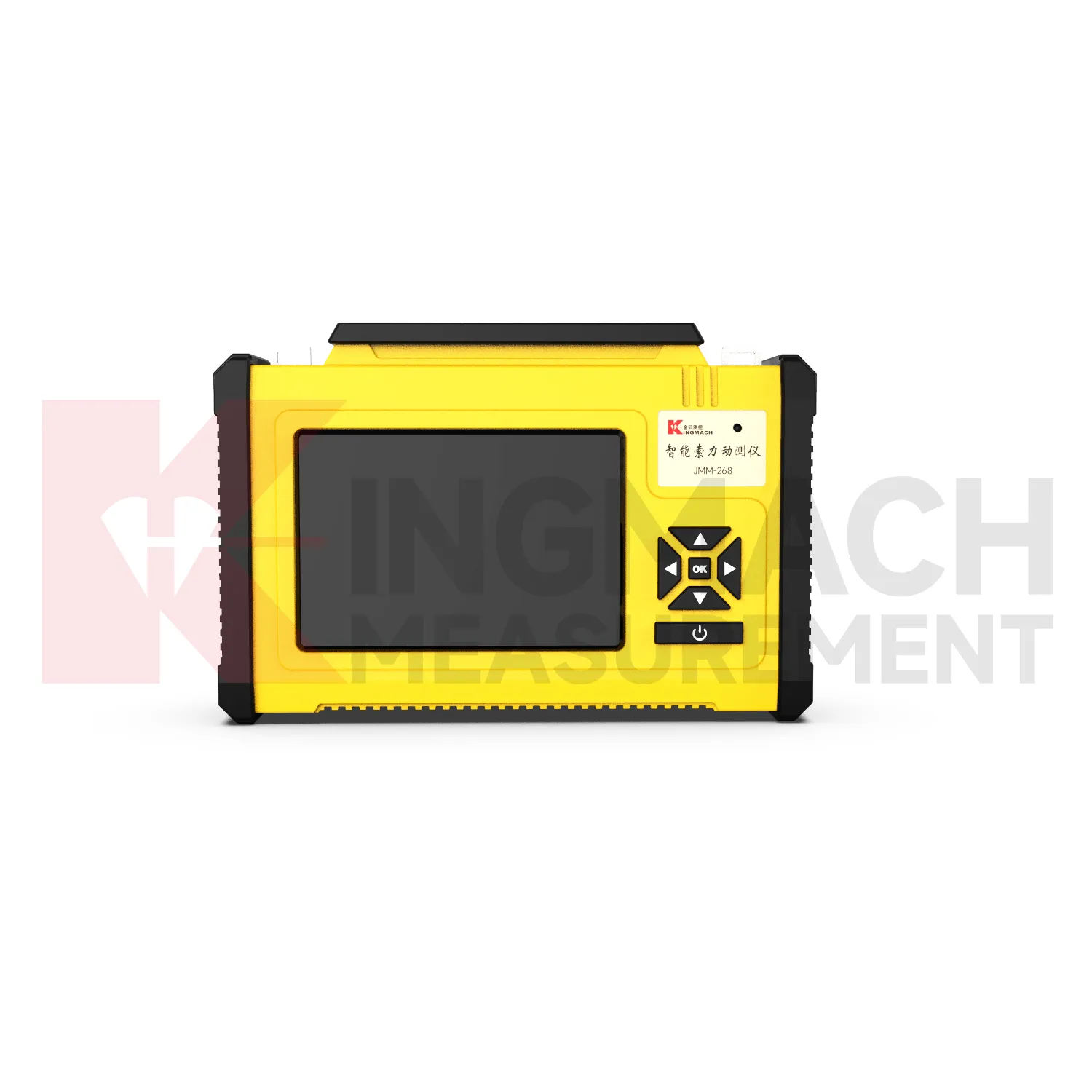
Cable force measuring instrument JMM-268L-1、2
View Details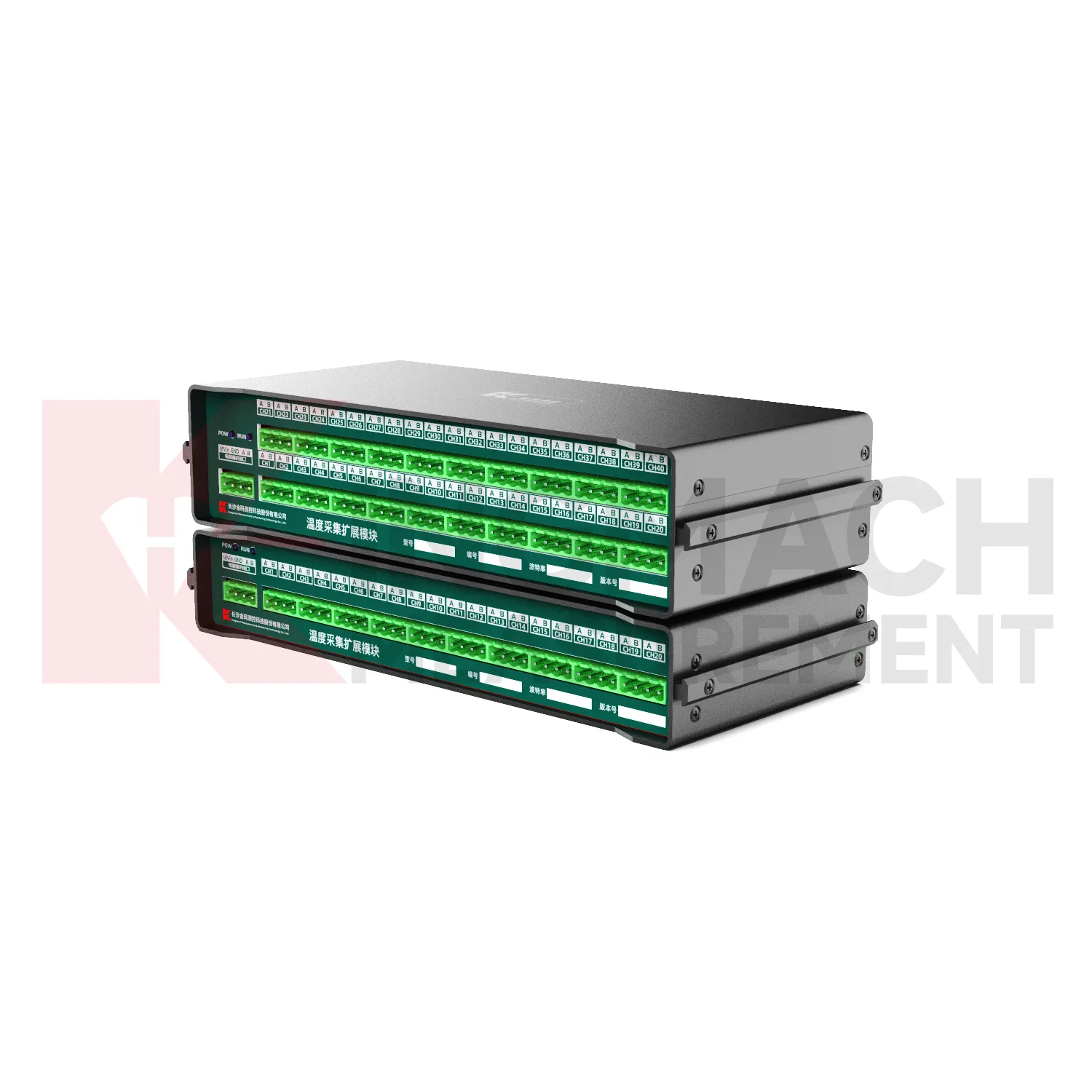
Temperature Acquisition Expansion Module JMWT-XXRTH
View Details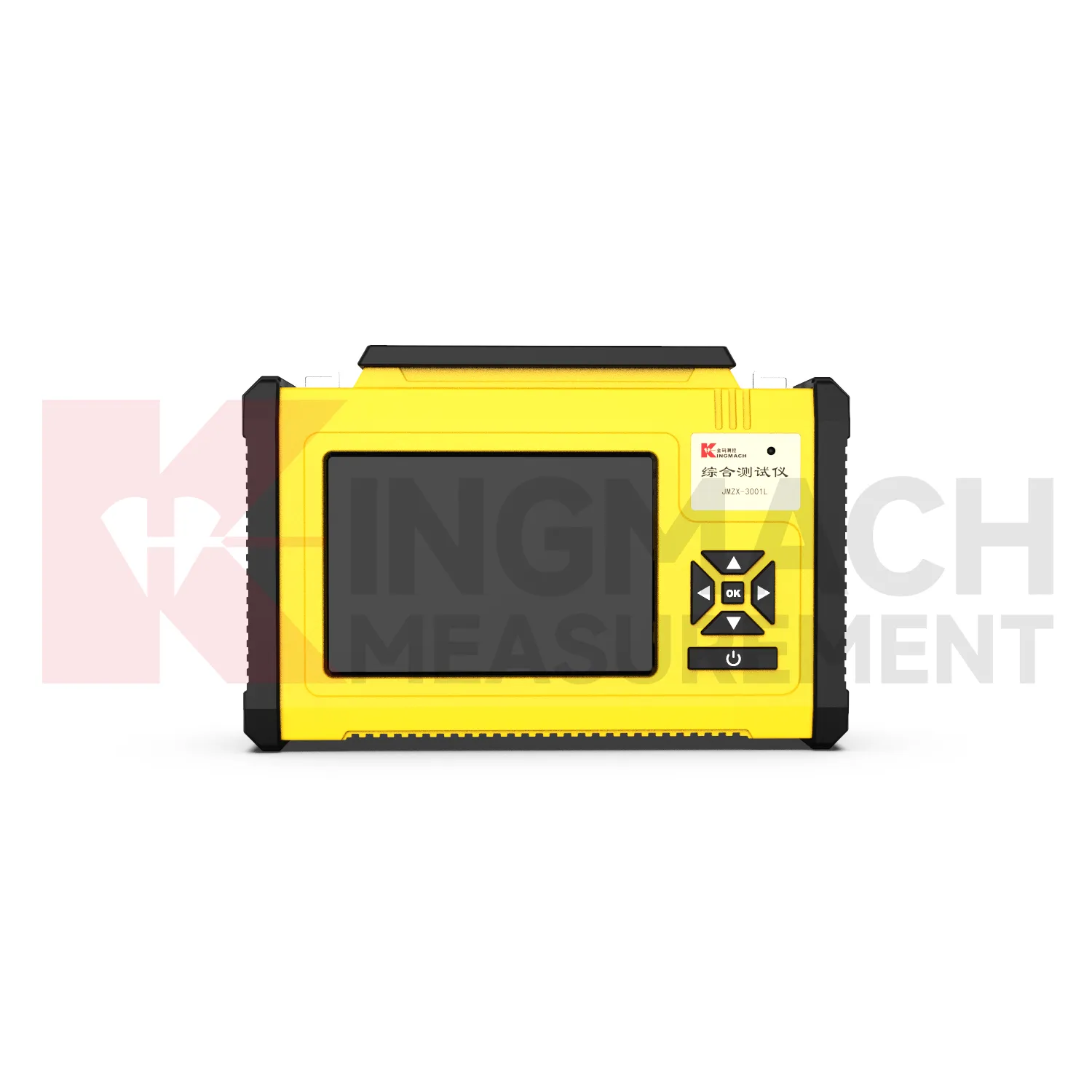
FAQ
Yes, if your network uses a standard protocol like Modbus TCP/IP or MQTT. The logger doesn't output a vibrating wire frequency signal directly, but it can coexist on the same SCADA platform. We often supply a serial-to-Ethernet converter for legacy systems that need a hardwired connection, and the data format is documented so you can parse the temperature strings in your own software.
The input channels are designed for 3-wire and 4-wire RTD connections, which compensates for lead resistance over distances up to 200 meters. For thermocouple inputs, we recommend an external cold-junction reference if your cable length exceeds 30 meters, otherwise the internal compensation is sufficient. Digital sensors like the DS18B20 are limited to about 100 meters in parasitic power mode.
The module is located under a sealed cover plate on the logger body. You power down the unit, remove four screws, unplug the old radio board, plug in the new one, and reassemble. The firmware detects the module type on next boot. No special tools needed, and we include a dry-bag for the swap if you're doing it in damp conditions. The whole process takes about five minutes.
The standard firmware doesn't support mesh routing; each logger communicates directly with a gateway or cell tower. If you need a mesh, we can load a custom firmware that uses the Semtech LR-FHSS modulation for low-power mesh, but that sacrifices some throughput. Most clients use a single gateway for star topology coverage up to several kilometers in open terrain.
Each logger comes with a four-point certificate from our in-house calibration lab, which is accredited to ISO 17025. The calibration points are at -20°C, 0°C, 25°C, and 70°C, with uncertainty stated for each. If your project requires specific points or a narrower range, we offer a paid custom calibration option with a two-week lead time.
Share your product type, target capacity, and application requirements. Our team can review the details and recommend a practical next step.
If you are interested in our products or want to become our partner.
Please leave your contact information, our team will contact you as soon as possible.
Mail: [email protected]
Contact Us: +8613808434127
Address: No. 188 Tongzipo West Rd, Changsha, Hunan, China